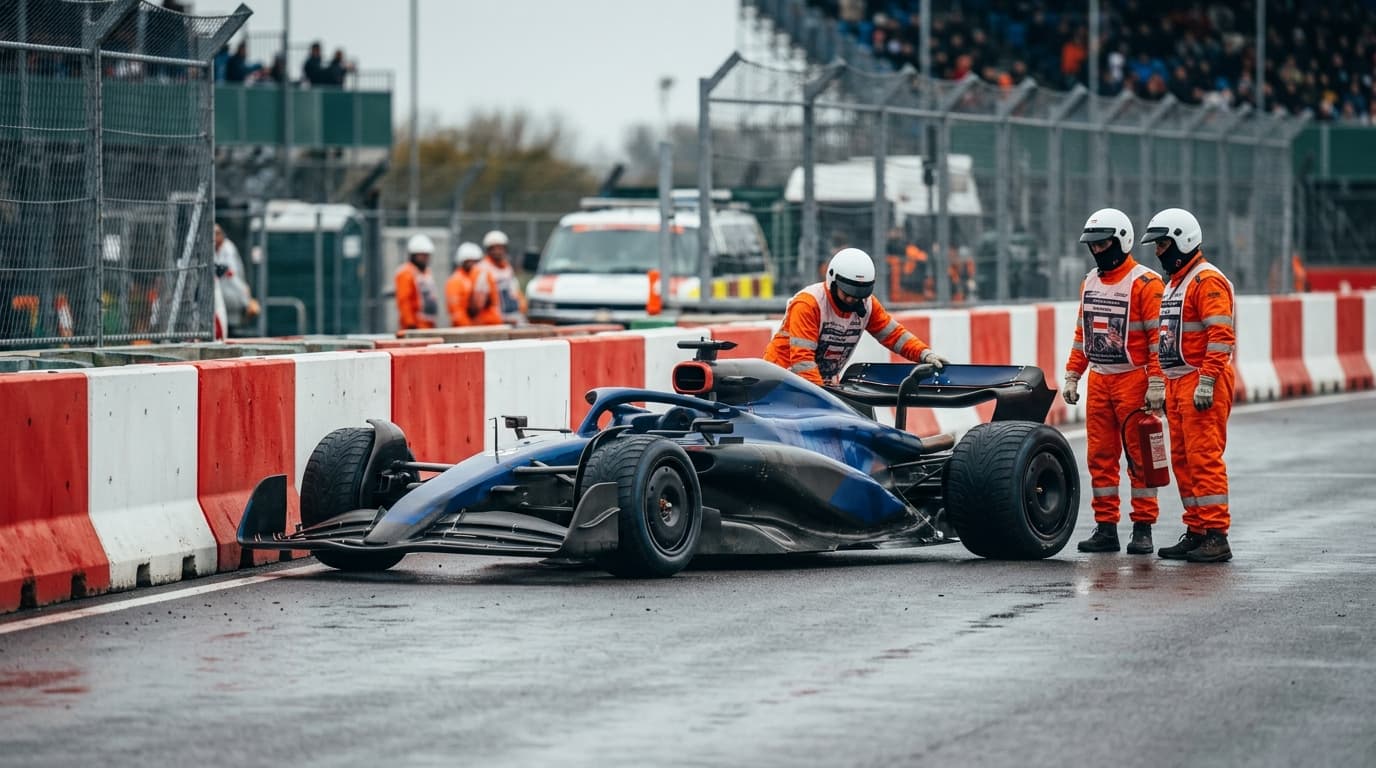
Formula 1 races are marvels of precision, speed, and engineering. But motorsport is inherently dangerous, and when an accident, stranded car, or hazardous debris litters the racing line, race control must intervene.
For newer fans, seeing the field suddenly bunch up or slow to a crawl can be confusing. How do these neutralizations work, and why do some drivers celebrate them while others groan in frustration? Let’s break down Formula 1's ultimate game-changers: the Safety Car and the Virtual Safety Car.
What It Is
When a track becomes unsafe for racing, race control has two main tools to neutralize the race:
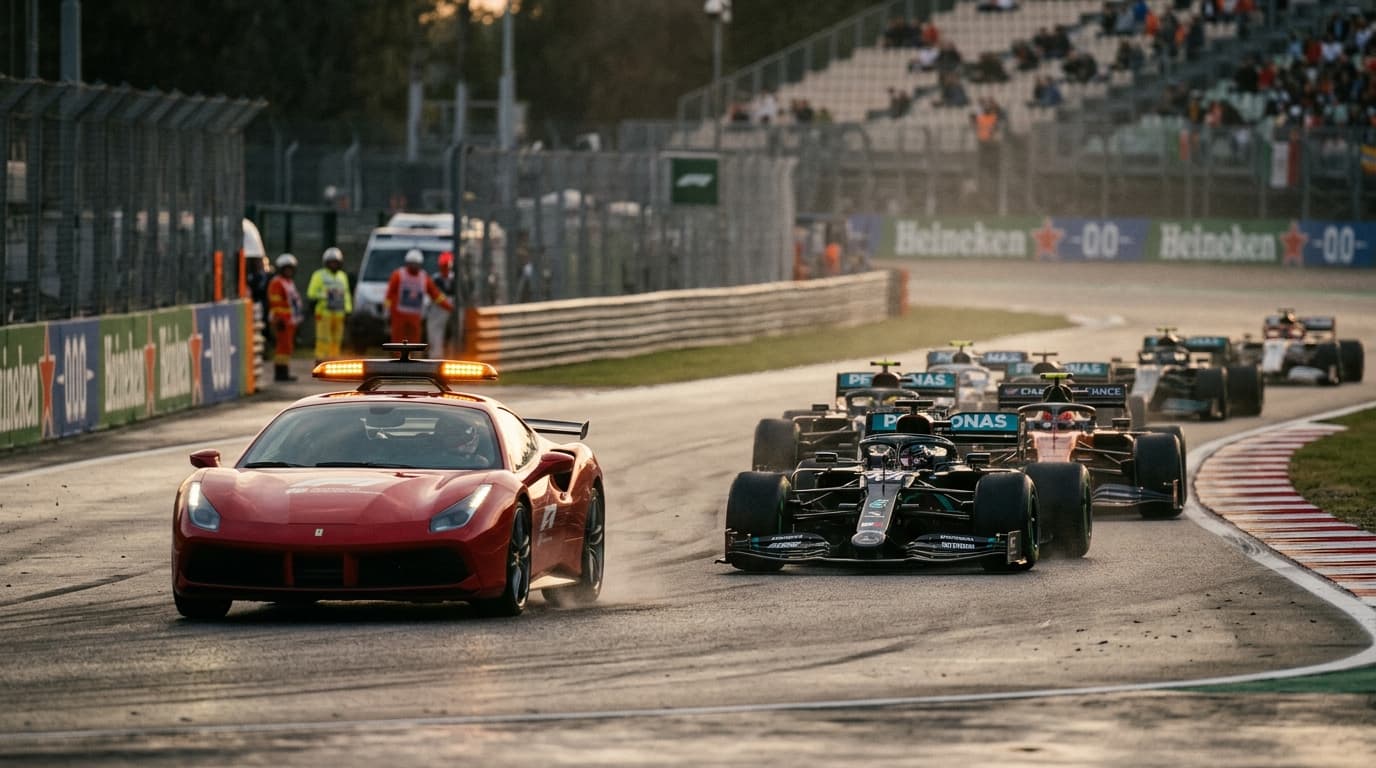
- The Safety Car (SC): A high-performance production car (provided by Aston Martin or Mercedes) that enters the track to lead the pack at a controlled speed. When deployed, all overtaking is strictly forbidden, and the field forms a single-file queue directly behind the Safety Car.
- The Virtual Safety Car (SC): Introduced to avoid the lengthy delays of a full Safety Car for minor incidents, the VSC requires no physical car on track. Instead, electronic signboards and steering wheel displays force drivers to slow down by a mandatory percentage, maintaining a strict delta time to a reference lap.
Why It Matters
Safety is the primary objective—protecting marshals and stranded drivers is paramount. However, from a sporting perspective, a Safety Car or VSC acts like a universal reset button.
In normal racing conditions, gaps of tens of seconds can open up between cars based on pace and tyre degradation. A Safety Car completely erases those gaps, bunching the entire field together. This can instantly revive a dying race, wipe out a dominant leader's hard-earned advantage, or give strategists a golden opportunity to make a "cheap" pit stop, losing far less time than they would under green-flag conditions.
How It Works
Understanding how these systems operate reveals why team pit walls react with immediate panic and frantic calculations:
The Virtual Safety Car (VSC)
When a VSC is deployed, drivers must immediately drop below a target lap time set by the FIA. They cannot overtake unless someone makes a mistake or pits. Because the cars maintain their relative distance from one another, the gaps do not shrink, but it provides a window where pitting is advantageous because the pit lane loss is minimized relative to cars driving slowly on track.
The Full Safety Car
When the physical Safety Car leads the pack, the rules shift dramatically:
- The Queue Forms: The leader catches up to the Safety Car, and the rest of the field queues up behind them. Lapped cars are often eventually permitted to overtake the Safety Car and unlap themselves to restore correct race order.
- Pit Lane Dynamics: The pit lane usually closes temporarily when the Safety Car is deployed, reopening once the field is correctly sorted behind it.
- The Restart: Once the track is clear and marshals are safe, the Safety Car turns off its amber lights, signaling that it will pit at the end of the lap. The race leader controls the pace until the official restart green flag is waved, leading the pack back to flat-out racing.
Putting It to the Test: The Safety Car Shuffle
To see how this impacts a Grand Prix, imagine a scenario where a front-runner like championship leader Andrea Kimi Antonelli is cruising at the front for Mercedes, holding a comfortable 15-second lead over rivals like Max Verstappen or Lewis Hamilton.
Suddenly, an off-track shunt triggers a full Safety Car. The field bunches up behind the Mercedes. That carefully built 15-second cushion vanishes in an instant. Furthermore, drivers who hadn't yet made their mandatory pit stops can now dive into the pits, swapping to fresh tyres while losing significantly less time than they would during normal racing.
When the race restarts, the leader is suddenly vulnerable, sitting ducks on older tyres with hungry competitors right on their rear wing. It turns a tactical procession into a chaotic, sprint-to-the-finish shootout.
Ready to put your newfound knowledge to the test? Check out our latest race predictions to see how strategy, pace, and unpredictable neutralizations might shape the outcome of the next Grand Prix.