If you watch a Formula 1 race, you will often hear drivers over the team radio complaining about a lack of grip, or commentators noting that a driver is struggling to stay within a second of the car ahead. While the cars are engineering marvels, they are essentially fighting an invisible opponent throughout every Grand Prix: the air itself.
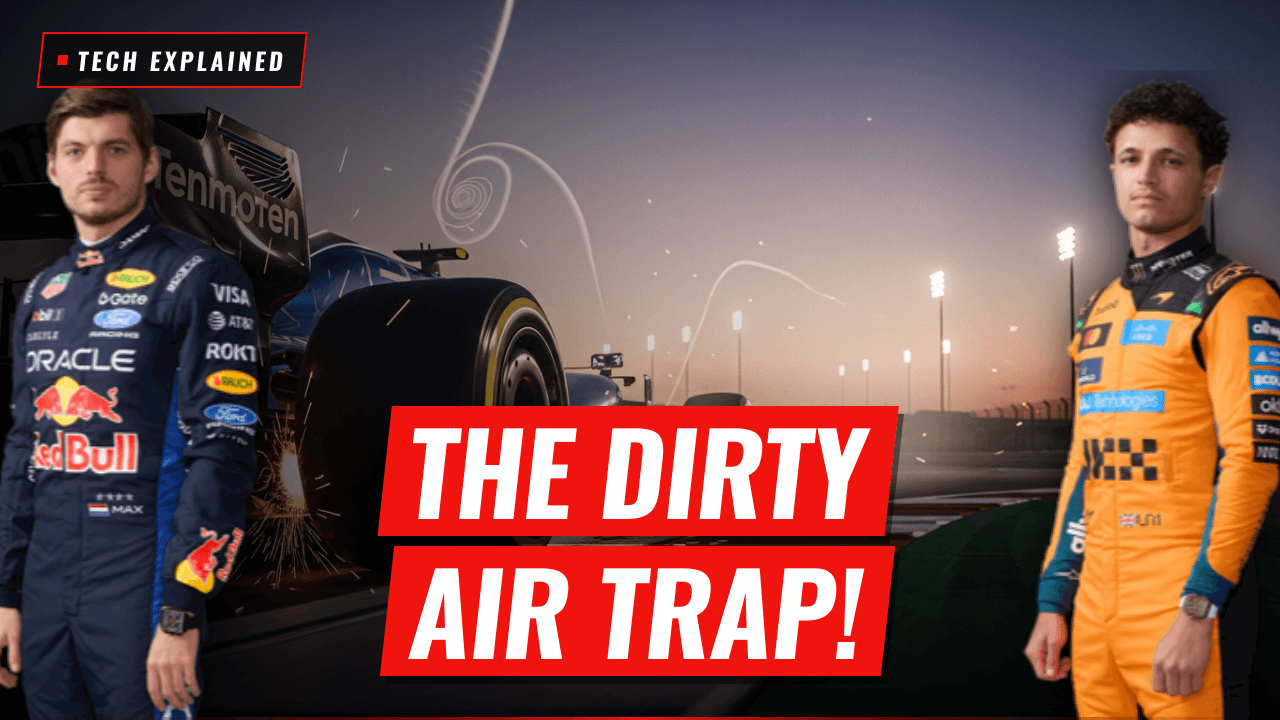
To understand why a car—driven by someone as skilled as Max VERSTAPPEN—might suddenly look clumsy or slow when following another, you have to understand the concepts of "Clean Air" and "Dirty Air."
What it is
In Formula 1, cars are designed to manipulate airflow to achieve one primary goal: downforce. Downforce is the aerodynamic force that pushes the car into the track, allowing it to take corners at high speeds without sliding off the tarmac.
- Clean Air is smooth, undisturbed, and consistent. When a car has clean air flowing over its front wing, sidepods, and rear diffuser, it produces maximum downforce.
- Dirty Air is the wake left behind a leading car. It is turbulent, swirling, and chaotic. When a following car enters this wake, it is effectively driving through a storm of air that has already been "broken" by the car in front.
Why it matters
The entire aerodynamic philosophy of a modern F1 car is built on receiving a smooth stream of air. When a car is in clean air, the engineers know exactly how the car will behave. The tires grip the road predictably, and the steering feels sharp.
When a driver enters dirty air, that predictability vanishes. Because the air is turbulent, the aerodynamic surfaces (the wings) cannot generate the same amount of downforce. This causes the car to slide, leading to understeer—a phenomenon where the front tires lose grip and the car fails to turn as sharply as the driver wants.
Furthermore, because the car is sliding more, the tires overheat. Hotter tires provide less grip, and the cycle continues. This is why you will often see a driver sit behind an opponent for several laps, appearing unable to make a move, only to dive past immediately once the leading car makes a mistake or pits. The driver behind is waiting for the leading car to clear the path so they can regain their "clean air."
How it works
The 2026 generation of cars is designed to be more agile and compact than its predecessors, utilizing active aerodynamics to balance efficiency and downforce. However, the laws of physics remain constant.
When a car moves at 200 mph, it doesn't just push air aside; it drags air with it and creates vortices—powerful, spinning tunnels of air coming off the rear wing and diffuser. If a following car is caught in these vortices, it loses the "suction" that keeps it planted to the track.
This is why you will often see drivers take unorthodox lines through corners. They aren't necessarily looking for a faster way around the bend; they are trying to move their car out of the direct wake of the car in front, searching for a sliver of clean air to keep their car stable.
A 2026 season example
Think back to the intense battles we have witnessed in the opening rounds of the 2026 season. For example, when a car like the McLaren of Lando NORRIS is closing in on a Red Bull or a Ferrari, the distance matters immensely.
Even with the advancements of the 2026 regulations, a driver following closely through a high-speed, multi-apex complex—like the famous "esses" found on many circuits—will experience a noticeable loss of downforce. You might see the following driver’s front end "washing out," forcing them to lift off the throttle.
Because they cannot commit to the corner as quickly as they would in clean air, they lose the momentum necessary to pull alongside on the subsequent straight. This creates a fascinating tactical stalemate: the chasing driver must balance the desire to stay close enough to potentially overtake with the risk of staying too close, overheating their tires, and losing the grip they need to actually finalize the move. It is a high-speed, invisible game of chess that defines the competitive nature of the 2026 grid.
Understanding this delicate balance is key to appreciating why some overtakes look effortless, while others require a perfect tactical setup. If you want to see how this dynamic might play out in the next Grand Prix, check out our latest race predictions.