The Standing Start: How Formula 1 Launches Really Work
Few sights in global motorsport match the raw tension of an F1 starting grid. Twenty-two cars sit motionless, revving their hybrid power units, waiting for five red lights to extinguish. Seconds later, a roaring pack sweeps into Turn 1 side by side at blistering speed.
For new viewers, the start might look like a simple matter of pressing the accelerator when the lights go out. In reality, an F1 standing start is one of the most demanding technical and mental challenges a driver faces all weekend.
What It Is
A standing start is the procedure Formula 1 uses to begin a Grand Prix. Instead of rolling toward the line behind a pace car—a method common in American oval racing or during wet-weather safety car restarts—the cars come to a complete halt in their staggered grid slots before accelerating away simultaneously.
Every driver must react to the same visual signal, managing enormous horsepower through their rear tyres without electronic aids, while navigating tight track limits and aggressive rivals within centimeters of their carbon-fibre bodywork.
Why It Matters
Track position is king in Formula 1. Aerodynamic turbulence makes overtaking during the race difficult, meaning the run from the grid to the first corner often represents the highest-reward moment of an entire afternoon.
- Massive position swings: A driver can realistically gain three or four positions before reaching Turn 1—or lose just as many with a sluggish launch.
- Race-defining track position: Gaining the lead off the line allows a driver to dictate tyre wear, manage pace in clean air, and command the preferred pit strategy.
- The "clean" versus "dirty" grid side: Odd-numbered grid slots (P1, P3, P5) usually sit on the racing line, where rubber has been laid down all weekend. Even-numbered slots often launch from the dustier, lower-grip side of the track, giving the clean side an immediate traction advantage.
How It Works
Pulling off the perfect launch requires precision across several distinct stages:
1. Thermal Preparation on the Formation Lap
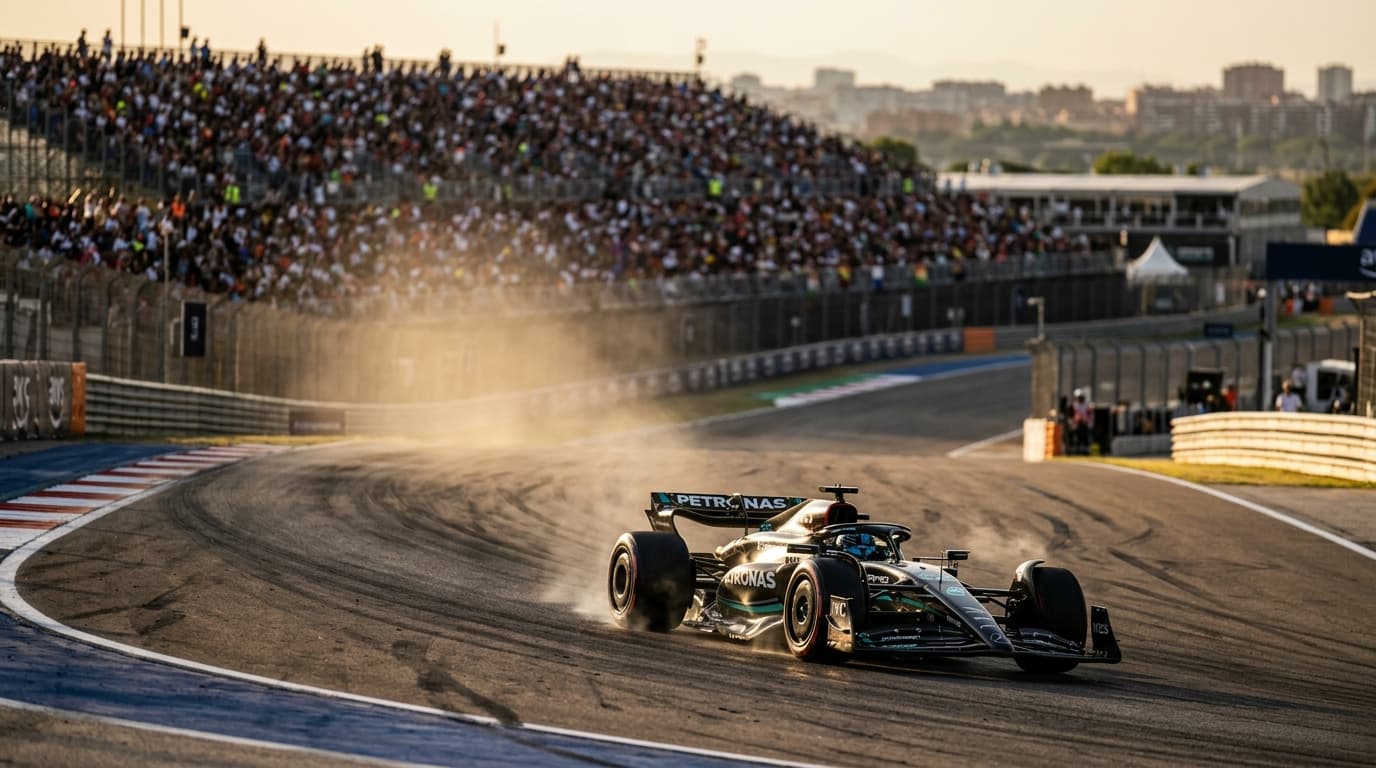
Grip depends heavily on temperature. On the formation lap, drivers aggressively weave their cars to generate heat in the tyre carcasses and apply heavy brake pressure to warm up their carbon-carbon brake discs. Near the end of the lap, drivers perform "burnouts"—spinning the rear wheels while stationary—to scrub off pickup and raise surface rubber temperatures to their ideal operating window.
2. Spotting the Grid Box
Drivers must align their front wheels precisely inside their painted grid box. If a car is positioned too far forward, or outside the lateral white boundaries, onboard transponders and FIA sensors trigger an immediate time penalty for an out-of-position start. A central yellow reference line assists drivers whose high cockpit sides severely limit forward visibility.
3. The Clutch Drop (Without Driver Aids)
Electronic launch control has been banned in Formula 1 for years. Drivers must manually operate the clutch using steering-wheel paddles.
Modern regulations restrict how teams map the clutch, leaving the release almost entirely in the driver's hands. The driver pulls the paddle to find the clutch's mechanical "bite point." Release it too fast, and the rear tyres spin violently, smoking the rubber and stalling forward momentum. Release it too slowly, and the car bogs down, potentially triggering the anti-stall system and stranding the car on the grid.
4. The Lights and Human Reaction
Once all cars are in position, the starter initiates the automated sequence:
- Five red lights illuminate sequentially, one second apart.
- Once all five are glowing, an automated computer program introduces a randomized delay between 0.2 and 3.0 seconds.
- The race begins the exact millisecond all five lights extinguish together.
Top drivers react in roughly two-tenths of a second. Anticipating the lights by even a fraction of a second triggers a jump-start penalty, making split-second focus paramount.
A Current-Season Example
The importance of start execution has been on full display throughout the 2026 season. As Andrea Kimi Antonelli built his championship lead for Mercedes, securing eight Grand Prix victories through the first 16 rounds, his starts proved decisive.
At multiple races, converting pole position into an immediate lead meant fending off explosive launches from experienced racers like George Russell, Lewis Hamilton, and Max Verstappen. When margins at the front are measured in hundredths of a second per lap, nailing the clutch release and defending the inside line into Turn 1 provides an enormous tactical buffer that protects against aggressive undercut strategies later in the race.
Conversely, a single misjudged bite point can unravel an entire weekend's qualifying effort before the field even completes the first sector.
Looking Ahead to the Next Race
When analyzing upcoming race matchups, look closely at start histories, launch reliability, and the distance from the starting grid to Turn 1. Circuits with long straights before the opening braking zone offer trailing drivers a major slipstream advantage, turning the standing start into an unpredictable sprint.
For deeper insights into how grid dynamics and tyre selections shape every Grand Prix weekend, explore our latest race predictions.