If you watch Formula 1 closely, you will often hear drivers complaining over the radio about "grain," "thermal degradation," or that their tyres have "fallen off a cliff." To the uninitiated, these sound like cryptic complaints. In reality, they are the heartbeat of Formula 1 strategy.
At the highest level of motorsport, you are only as fast as your rubber allows. Mastery of F1 is rarely just about who has the fastest car; it is about who can manage the delicate, complex relationship between speed and longevity.
What Are Tyre Compounds?
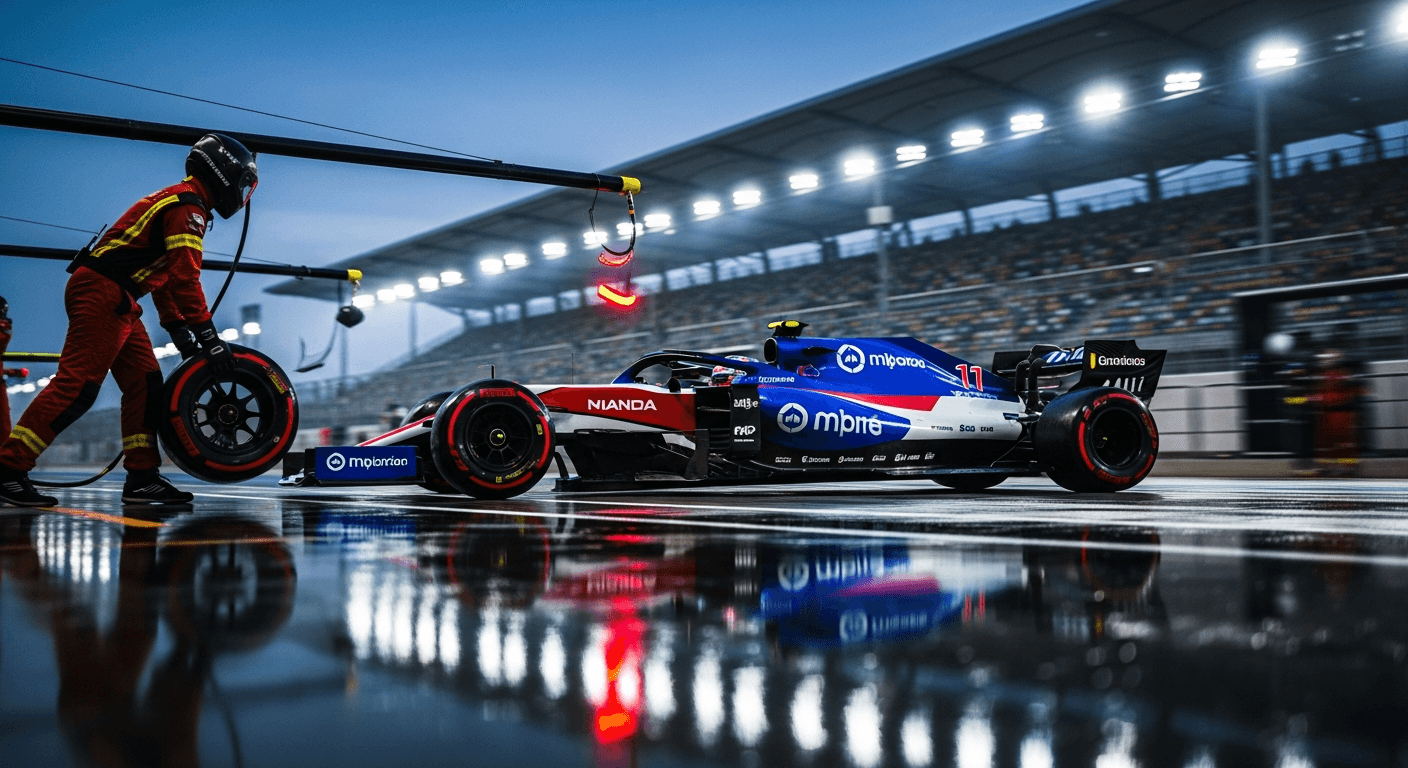
Pirelli, the official tyre supplier for Formula 1, brings three different dry-weather compounds to every Grand Prix weekend. These are categorized by color-coded sidewalls that you can easily spot on the broadcast:
- Soft (Red): The sprinters. These tyres provide the highest level of grip and the fastest lap times, but they degrade (wear out) rapidly.
- Medium (Yellow): The all-rounders. These offer a balance between performance and durability, often used as the "middle" stint of a race.
- Hard (White): The marathon runners. They are the most durable but offer the least amount of raw grip, making them slower over a single lap.
Every team must use at least two different compounds during a dry race, necessitating at least one pit stop. This mandatory switch is where the chess match begins.
Why It Matters
A Formula 1 car generates massive aerodynamic downforce, which pushes the car into the track. This downforce is essential for cornering speed, but it also creates friction. When you combine that friction with the immense torque of the engine, the rubber on the tyres begins to break down.
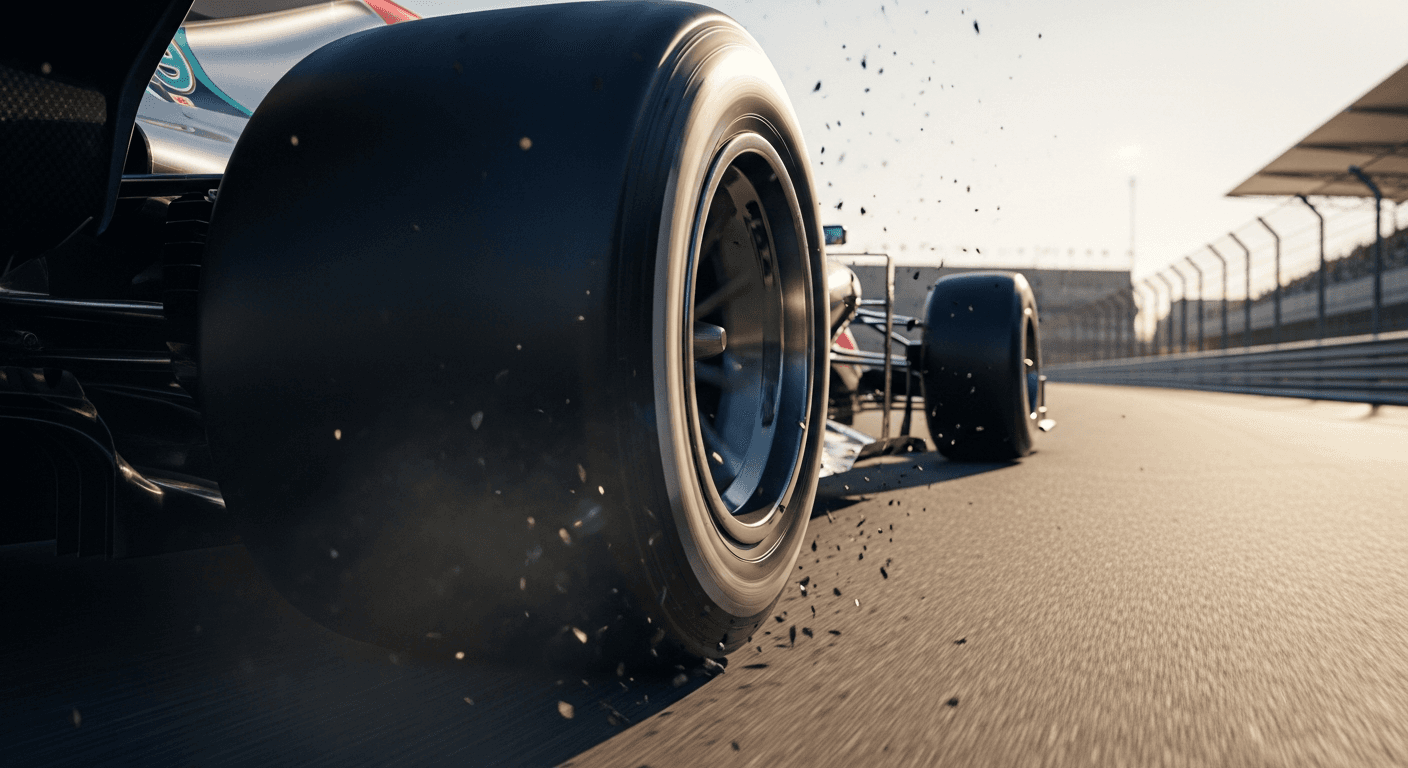
If a driver pushes too hard, too early, they overheat the surface of the tyre. This causes "blistering" (bubbles forming under the rubber) or "graining" (chunks of rubber tearing off). Once a tyre is damaged, its ability to grip the track surface plummets. A driver might be setting blistering lap times, but if they destroy their tyres in the first ten laps, they will be forced to pit early, potentially ruining their strategy for the rest of the race.
Conversely, a driver who "saves" their tyres—by taking corners slightly smoother and avoiding wheel-spin—can extend their stint. This gives the team flexibility to wait for a better pit stop window or to make a late-race charge on fresher tyres.
How It Works in Practice
The goal for any strategist is to minimize the total time spent in the pit lane while maximizing the car's average speed over the full race distance.
Imagine a typical race scenario. A driver like Max Verstappen, driving for Red Bull Racing, might start on the Soft compound to gain an advantage off the line. However, Lando Norris, driving for the McLaren, might choose to start on the Medium compound. Norris knows his tyres will be slower initially, but he expects them to last significantly longer.
This creates an "offset." As the race progresses, Verstappen’s Soft tyres eventually reach their limit, forcing him to pit for fresh rubber. Norris, meanwhile, stays out, inheriting the lead. By the time Norris finally pits, he might emerge back onto the track on fresh Soft tyres, allowing him to hunt down Verstappen, who is now struggling on older, worn-out rubber.
A Current-Season Example
Consider a high-stakes scenario we see often in the 2026 season. Imagine a race where degradation is high, such as the blistering heat of a circuit like Bahrain or Qatar.
Drivers like Lewis Hamilton (Ferrari) and George Russell (Mercedes) are constantly balancing their pace. Early in a race, you might see them consciously backing off the car in front of them by a second or two. While it seems counterintuitive to slow down, they are doing so to "manage temperatures." By leaving a gap, they ensure they are not driving in the "dirty air" (turbulent air) coming off the car ahead, which causes their own front tyres to overheat.
If a driver manages their temperatures correctly, they can preserve the rubber surface. We often see drivers "save" their tyres for the final 10 laps of a race. Because they didn't push as hard in the middle stint, they arrive at the end of the race with "more tyre" than their rivals. This often leads to thrilling final-lap overtakes, as a driver on fresher, grippier rubber can easily pass a driver whose tyres are essentially bald, even if the latter has been faster all day.
Predicting the Outcome
Understanding tyre strategy is the key to predicting who will stand on the podium. When you look at the grid, don't just look at who is fastest; look at who has been the kindest to their tyres during the practice sessions.
If you want to see how these strategic nuances impact the probability of a win, be sure to check out our latest data-driven predictions. We analyze compound wear, track evolution, and historical driver performance to give you an edge before the lights go out.