What Are X-Mode and Z-Mode? F1 Active Aerodynamics Explained.
15 nov. 2026 · 4 min de citit · De F1 Predictions
Discover how the 2026 dual-state wing system is revolutionizing race pace and energy management.
Articol
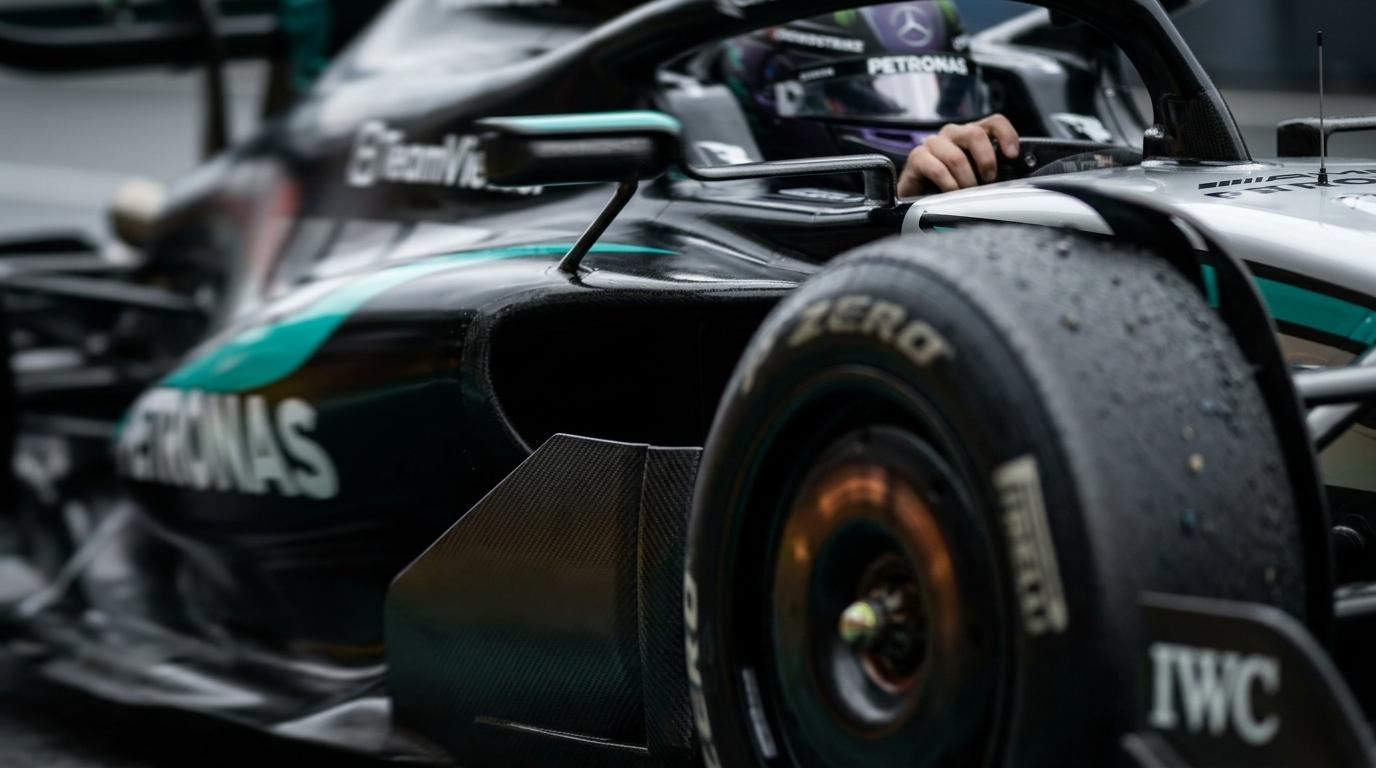
If you have tuned into Formula 1 broadcasts during the 2026 season, you have likely heard commentators frequently discussing "X-Mode" and "Z-Mode." While Formula 1 has always been a battle of airflow and engineering ingenuity, the cars racing today feature one of the most radical technical transformations in the sport's history: active aerodynamics.
For newer fans trying to make sense of the shifting wing angles and blistering straight-line speeds, here is a complete breakdown of how active aero works, why it was introduced, and how it shapes the outcome of every Grand Prix.
What Is Active Aerodynamics?
Active aerodynamics is a dual-state wing system that changes the car's physical shape depending on whether it is negotiating a corner or rocketing down a straight.
Unlike previous eras, where aerodynamic surfaces remained largely static—with only the rear-wing Drag Reduction System (DRS) opening in specific overtaking zones—modern F1 machinery features interconnected movable elements on both the front and rear wings. Every car on the grid dynamically alternates between two configurations:
- Z-Mode (High-Downforce Mode): The default configuration. The wing flaps remain steep and fully deployed to push the car down onto the tarmac through turns.
- X-Mode (Low-Drag Mode): The straight-line configuration. The flaps on both the front and rear wings flatten out, dramatically cutting air resistance.
Because active aero is an intrinsic property of the car, every driver can utilize X-Mode across designated straight-line zones on every lap, regardless of whether another car is ahead.
Why Active Aerodynamics Matters
Traditionally, setting up an F1 car meant managing an unforgiving compromise. Piling on steep wing angles provided immense downforce to corner at breathtaking speeds, but that downforce produced parasitic drag. On long straights, excess drag acted like a parachute, blunting top speed and draining energy. Conversely, trimming wings for straight-line speed left cars sliding uncontrollably through twisty sectors, destroying tyres.
The introduction of the 2026 regulations intensified this dilemma. With modern power units relying on an equal 50/50 split between internal combustion and 350kW of electrical hybrid deployment, cars face immense energy demands. Forcing a car to push against massive aerodynamic resistance along the straights would rapidly exhaust its battery reserves.
Active aerodynamics solves this puzzle. It gives drivers high cornering grip when turning, and instant aerodynamic efficiency the moment they exit onto a straight, allowing hybrid systems to deploy power effectively without wasting energy fighting air.
How X-Mode and Z-Mode Work
The transition between modes is coordinated and tightly regulated by the FIA to ensure safety and stability:
- Synchronized Wing Movement: When X-Mode is engaged, actuators simultaneously adjust the front wing flap angles and the rear wing elements. Moving both wings together is crucial. If only the rear wing opened, the car's aerodynamic balance would violently shift forward, causing the rear tyres to lose grip and spin the car. Coordinated movement ensures the car remains stable and predictable.
- Straight-Line Activation: As a driver exits a corner and reaches the designated activation point on a straight, they trigger X-Mode. The flattened wings instantly slash drag by roughly 40 to 55 percent, providing a rapid surge in acceleration.
- Fail-Safe Deactivation: Safety is paramount at high speeds. The moment a driver taps the brake pedal or lifts off the throttle entering a braking zone, the wings instantly snap shut back into Z-Mode. Maximum downforce is restored before the car turns into the corner, giving the tyres the vertical load needed to decelerate and grip the circuit.
Active Aero in Action: The 2026 Battle
The impact of active aero is clearly visible in the current 2026 championship fight. Mercedes and Kimi Antonelli have set the benchmark across the season, racking up nine victories through superior aerodynamic efficiency and seamless transitions between modes.
At circuits with sweeping high-speed bends following long full-throttle blasts, such as Silverstone and Spa-Francorchamps, managing the edge of the aerodynamic envelope is critical. Antonelli and his rival Max Verstappen rely on their teams' packaging to ensure that when switching from X-Mode back to Z-Mode under extreme braking, downforce arrives cleanly without unsettling the chassis.
During tight wheel-to-wheel battles, this balance becomes decisive. When Antonelli defended against Verstappen at high speed, both cars flattened their wings in X-Mode down the straights. Because raw aerodynamic drag was equalized, the fight came down to who could harvest battery energy efficiently and brake latest into the turn, trusting their front and rear flaps to snap into Z-Mode at the precise millisecond they attacked the apex.
Understanding active aerodynamics reveals that modern F1 racing is not just about raw horsepower; it is about dynamic adaptation. As you track the championship run-in, keep an eye on how different teams configure their aero packages by checking our latest race predictions ahead of the next Grand Prix weekend.
Cititor
Următoarea ta mutare
Surse
Conexe
Previzualizare25 nov. 20264 MIN
Qatar GP Preview: Antonelli Tipped for Milestone Tenth Win
Zvonuri1 nov. 20263 MIN
Paddock Whispers: The Latest 2027 Driver Market Rumors
Știri14 aug. 20263 MIN
FIA Bans Ferrari's 'Exhaust Loophole' Ahead of 2027 Season
Breaking3 aug. 20262 MIN
Formula 1 in Preliminary Talks for German Grand Prix Return

Breaking29 iul. 20263 MIN
2026 F1 Finale at Risk After WEC Middle East Cancellations
Știri13 iul. 20263 MIN
FIA Implements AI-Powered ECAT System for 2026 Track Limits
Comentarii
- Niciun comentariu încă. Fii primul.