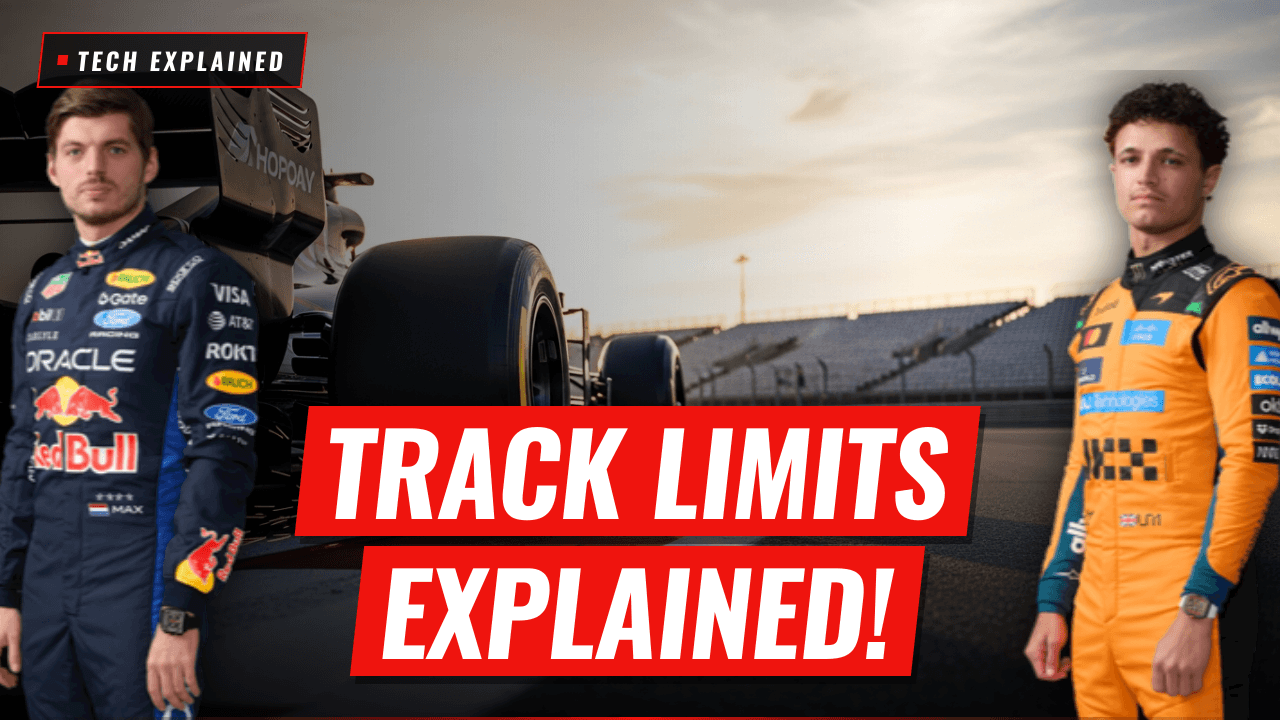
If you watch any Formula 1 qualifying session or race, you will eventually hear a commentator mention the phrase "track limits." It is one of the most frequently discussed topics in the sport, often becoming the deciding factor between a pole position and a disappointing start, or between a podium finish and a points-draining penalty.
For new fans, however, the concept of track limits can seem arbitrary. Why are drivers penalized for driving on the asphalt just outside the white line? Is the rule strictly about safety, or something more?
To understand the 2026 season, you must understand the rules of the road. Let’s break down exactly what track limits are, why they exist, and how they define the outcome of the races you watch every weekend.
What Are Track Limits?
In the simplest terms, track limits define the legal boundaries of the racing circuit. During a Formula 1 session, the race track is not just any asphalt that happens to be there; it is defined specifically by the FIA (the sport's governing body) as the area between the white lines on either side of the track.
The fundamental rule is this: a driver must keep at least one part of their car in contact with the track—or at least within the white lines—at all times. If all four wheels of the car cross beyond the white line, the driver is considered to have left the track.
Why Do They Matter?
You might wonder why it matters if a car is a few centimeters off the track. The reason is twofold: performance and fairness.
Racing is a game of geometry. Every corner has an "ideal line"—the fastest path through the bend. By going slightly wide, a driver can open up the angle of the corner, carry more speed through the apex, and accelerate earlier on the exit. If there were no track limits, the "ideal line" at many circuits would simply include the runoff area. This would essentially allow drivers to "cheat" the corners, effectively shortening the track and negating the challenge of the circuit design.
Furthermore, track limits ensure consistency. By defining a strict boundary, the FIA forces every driver—from Max Verstappen at the front of the pack to newer drivers—to tackle the circuit under the exact same constraints.
How It Works: The Enforcement
Enforcing these boundaries is a high-tech operation. Race Control uses a combination of tools to monitor every car on every lap:
- Pressure Sensors and Cameras: Many corners are equipped with pressure-sensitive loops or high-speed cameras that automatically detect when a car has crossed the line with all four wheels.
- Stewarding: If the automated technology doesn't provide a clear verdict, human race stewards review video footage to make a final ruling.
The consequences for breaching these limits are standardized but progressive:
- Qualifying: If you exceed track limits during a qualifying lap, that lap time is immediately deleted. If it was your fastest lap, you effectively lose your position.
- The Race: During the Grand Prix, a driver is typically given a "black and white" warning flag after a set number of violations. If they continue to exceed limits, they receive a time penalty (usually 5 seconds or 10 seconds), which can be the difference between finishing on the podium or slipping down the order.
A 2026 Season Example
To see how this impacts the 2026 season, consider a scenario we have seen play out multiple times this year during qualifying. Imagine a high-speed circuit with sweeping corners. A driver like Lando Norris, fighting for every millisecond to secure a better grid position, might push his car to the absolute limit.
In an attempt to carry an extra two kilometers per hour of speed into a final corner, he puts all four wheels a fraction of a meter beyond the white line. In the old days of motorsport, the driver might have been praised for "using all the track." In 2026, the sensors trigger, and his lap time is deleted before he has even crossed the start-finish line.
This creates an intense psychological pressure. For drivers who are currently locked in battles for critical championship points, the mental discipline required to flirt with the white line without crossing it is just as difficult as managing the car’s mechanical setup. It is this thin margin of error that separates the best drivers on the grid from the rest.
Understanding track limits is the key to appreciating why your favorite driver might have had a time deleted or received a penalty. It is the invisible wall that keeps the racing honest.
Enjoying the technical side of the sport? If you want to see how these rules, alongside driver form and team upgrades, impact the outcome of the next Grand Prix, be sure to check out our latest data-driven race predictions here at F1 Predictions.