The Spielberg Squeeze: Why Qualifying at the Red Bull Ring Will Define the Austrian Grand Prix
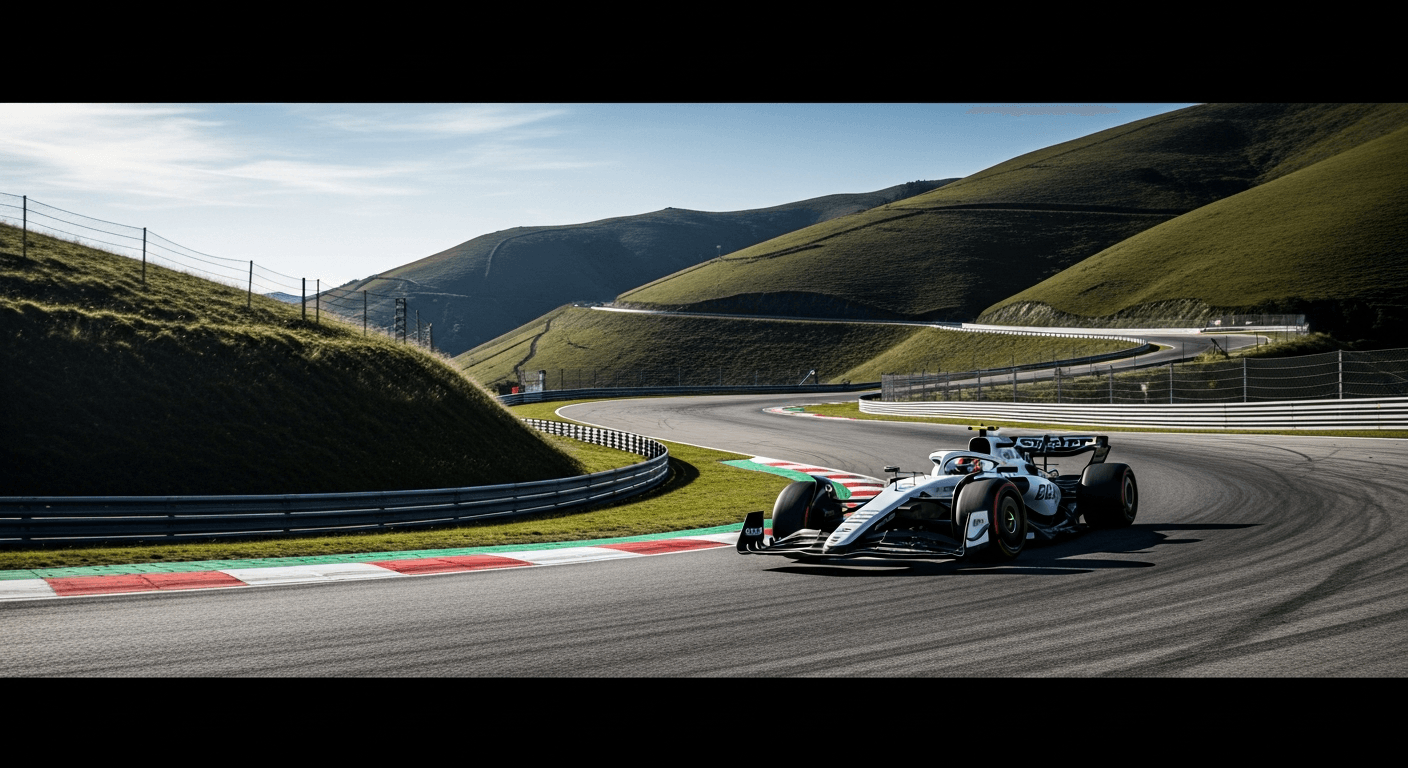
The Formula 1 paddock arrives in the Styrian mountains this weekend with a familiar, yet rapidly shifting, narrative. Following a tactical masterclass in Barcelona that saw Ferrari’s Lewis Hamilton claim a dominant victory, the momentum of the 2026 season has firmly swung toward the Maranello-Mercedes axis. As we look ahead to the Austrian Grand Prix, the focus shifts from the sweeping, high-speed nature of the Spanish circuit to one of the shortest, most volatile layouts on the calendar: the Red Bull Ring.
With margins in the mid-field closing and the top of the standings tightening, the Austrian Grand Prix is not merely a race; it is a high-altitude game of inches. With a lap time likely to dip below 65 seconds, the Red Bull Ring creates a unique compression effect where a single mistake in a single corner can be the difference between a front-row start and elimination in Q2.
Headline Storylines
- The Ferrari-Mercedes Hegemony: Having split the honors across Canada, Monaco, and Spain, Ferrari and Mercedes have established a clear technical advantage. The question for the Austrian weekend is whether this superiority is track-specific or if the Red Bull Racing package—which has looked increasingly lethargic in recent rounds—can claw back time in the braking zones.
- The Traffic Penalty: At a circuit this short, the "out-lap" traffic during Qualifying is notorious. Drivers are forced to navigate a congestion-heavy sector in the final minutes of sessions, making track position on Saturday afternoon a primary performance metric. We expect significant team-led strategic management to ensure their lead drivers find clear air.
Circuit Characteristics: The Altitude Factor
The Red Bull Ring presents a specific challenge: it is not just about raw downforce; it is about efficiency. Sitting at an altitude of approximately 700 meters, the thinner air reduces the efficacy of the wings. This forces teams to run higher downforce configurations than they would typically run for a circuit with such long straights, creating a compromise between top-end speed and mid-corner stability.
The track rewards "stop-start" car behavior. The heavy braking zones into Turns 1, 3, and 4 require a stable rear end during entry and immediate traction on exit. Teams that struggled with rear-end rotation in the slower, technical sectors of Barcelona—such as the Aston Martin and Audi entries—will need to recalibrate their differential maps to avoid the dreaded wheel-spin that plagued their long-run pace in Spain.
Drivers to Watch
Lewis Hamilton (Ferrari): Fresh off his victory in Barcelona, Hamilton is arguably in the best form of his 2026 campaign. His ability to manage the delicate tyre strategy shown in his recent win proves that he is maximizing the Ferrari package. Keep an eye on his sector 2 performance; if he can maintain his current delta through the middle of the lap, he will be the man to beat.
George Russell (Mercedes): Russell has been the model of consistency. While his teammate Kimi Antonelli dominated the middle sector of the season, Russell has consistently been the closer. His qualifying pace has been sharper than almost anyone on the grid, and with the Red Bull Ring being a qualifying-critical circuit, Russell is a prime candidate for a pole position charge.
Max Verstappen (Red Bull Racing): Racing on home soil, the pressure on Verstappen is palpable. Red Bull has struggled to replicate their early-season race pace, often fading in the final stint as seen in the recent Rounds 5-7. Verstappen will need to drag the car into contention on raw talent alone, as the current data suggests the RB26 is lacking the necessary traction to compete with the Ferrari and Mercedes on equal footing.
What the Result Will Hinge On
The Austrian Grand Prix result will be determined by three distinct factors:
- Braking Stability: Our predictive models indicate that the highest correlation to race success here is the ability to brake deep into Turn 3 without compromising the exit. Watch the telemetry during FP2; the driver who can stop the car without inducing locking will be the one on the podium.
- Qualifying Traffic Management: In a field where the gaps are measured in thousandths, a compromised final sector due to traffic will ruin a weekend. Teams that utilize "slingshot" gaps effectively during Q3 will have an exponential advantage.
- Tyre Degradation vs. Pushing: The Red Bull Ring is surprisingly punishing on the rears. While it is a short track, the constant acceleration phases mean that teams who "over-drive" the car in the opening laps of a stint will pay a heavy penalty in the final ten laps.
As we head into the weekend, the data suggests that while the front-runners are clear, the fight for P6 through P10 is entirely unpredictable. If you are preparing to place your wagers or simply want to know who is poised to perform, be sure to consult our latest F1 Predictions dashboard for the full, algorithm-backed breakdown of the qualifying and race projections before the lights go out on Sunday.